|
|
|
A very important parameter that characterizes the quality of a machine is its capability to work without stops or visible change of performances. Moreover, the life of a product is a variable that a client can easily measure and so this variable must be monitored to be sure to satisfy the client.
A reliability study allows to evaluate the endurance of a system and also to understand how to improve it. Furthermore mathematic and statistics are used to define models and tests to optimize realibility and warranty costs.
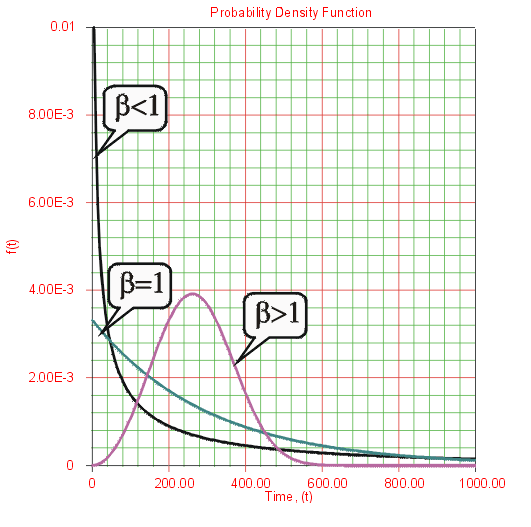
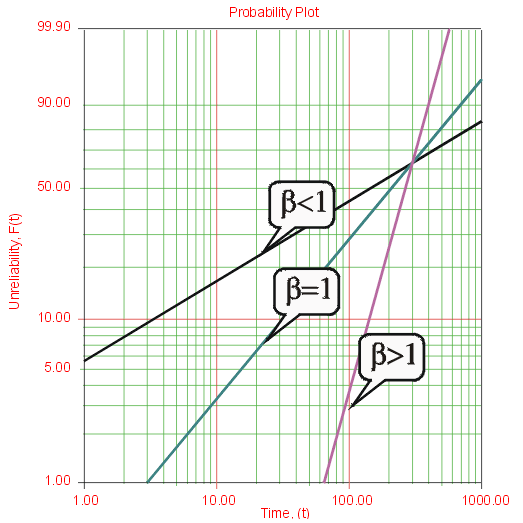
The most used model to study reliability is the Weibull model, shown in the following picture.
Reliability tests are usually defined as following:
- test to know the ultimate limits if a components or a system ( HALT: highly accelerated life test ): at what temperature the system will be out of order? when a special function is lost if we are working with 50% more power used by the machine?
- test to know the nominal behaviour using accelarated tests( HAST: highly accelerated stress test). The life of a machine is usually some years but the cycle to introduce a new product is today reduced to some monthes. Long time reliability must be verified in a short period.
- test to verify reliability of manufactured products. Some tests can be performed before sending the product to the client to assure that no issues will be found on site. The optimization of these tests allows to reduce trials keeping the quality level.
|
|